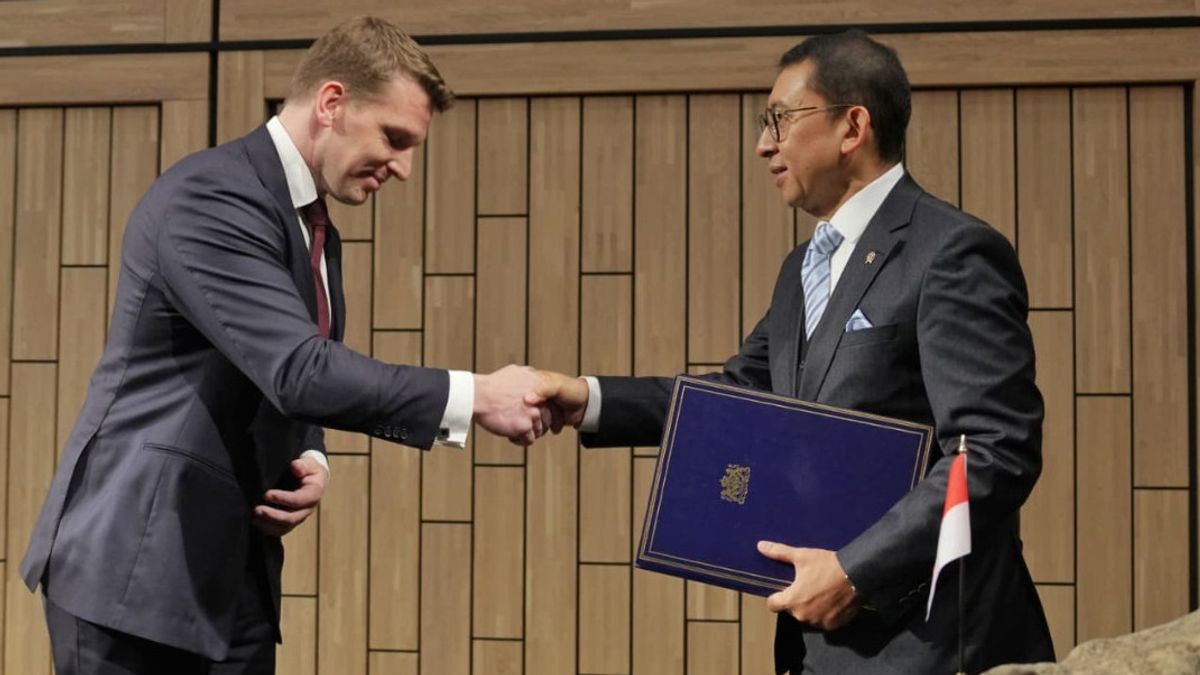


LEIDEN - Minister of Culture of the Republic of Indonesia Fadli Zon officially received the return of the Dubois Collection, including the ancient human fossil Pithecanthropus erectus (now classified as Homo-erectus) from the Dutch Government during a ceremony at the Naturalist Museum, Leiden, Friday, September 26. This historic moment coincided with the working visit of Indonesian President Prabowo Subianto to the Netherlands and marked a new chapter of cultural diplomacy between the two countries.
The monumental collection contains about 28,000 fossil artifacts found by Eugène Dubois in Trinil, 18911892. This collection is an important reference for human evolution studies while asserting that Indonesia is one of the oldest civilizations in the world.
Menbud Fadli emphasized that this repatriation was a restoration of sovereignty and a strategic victory after more than a century of traces of knowledge about the origins of humans separated from their homeland. Today we are closing the brink of history and restoring the dignity of knowledge born from the Trinil. The return of the Dubois Collection is proof of Indonesia's cultural diplomacy at work, the legal ownership of the Republic of Indonesia is recognized, and access to world research is maintained," he said.
The Minister of Education, Culture, and Dutch Sciences, Gouke Moes, called this return a commitment of the Dutch to carry out the repatriation of colonial collections responsibly. Menbud Fadli sees it as a historic step that enriches national archaeological research and strengthens cultural cooperation.
SEE ALSO:
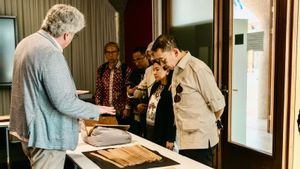



Dubois' collection is now returning to his home, but the door to world science remains open. Indonesia now stands as a subject of knowledge, not just a location of findings," said Minister ofbud Fadli.
This success was born from the long work of the Ministry of Culture's Repatriation Team since early 2025. The team explored the origins of the collection, negotiated intensively with the Dutch Colonial Collections Committee (CC), and compiled a technical plan for the transfer. The two countries also formed a joint team to oversee the stages of repatriation, conservation, digitization, scientific publications, exhibitions, to increase the capacity of researchers and collection managers.
Menbud Fadli added, this success is an important precedent for the next repatriation. "After Dubois, we will continue to repatriate other important collections, deepen cross-disciplinary research so that our cultural artifacts return to their roots, science grows from their sources, and provides the greatest benefit to the people of Indonesia," he concluded.
The transfer timeline is currently being discussed and the Netherlands will follow the schedule set by Indonesia. In the early stages, the entire collection is stored in the National Museum. Of the 28,000 artifacts, many are very small in size, including one tooth which counts as one item.
The English, Chinese, Japanese, Arabic, and French versions are automatically generated by the AI. So there may still be inaccuracies in translating, please always see Indonesian as our main language. (system supported by DigitalSiber.id)
Most Popular Tags
#Prabowo Subianto #donald trump #firearm #8791 #giias 2026Popular