
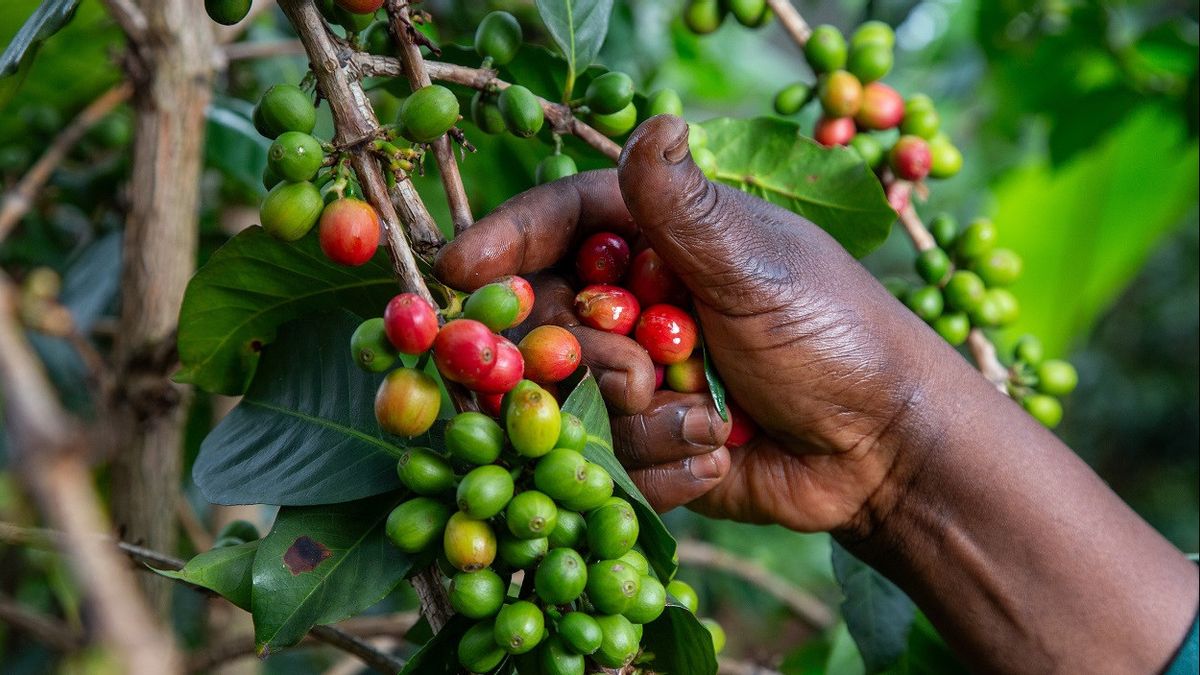


JAKARTA - In the fertile highlands of the eastern part of the Democratic Republic of Congo, coffee plants decay and wither due to decades-long escalation of the conflict in the region has left farmers reluctant to manage their land this year.
Fighting between governments and M23 rebels escalated early in the year when rebels seized major cities in the provinces of North and South Kivu, a major coffee-producing area known for its high quality Arabica seeds.
The latest fighting has killed thousands of people and displaced hundreds of thousands of others, including farmers. It has also blocked export routes, threatening to hinder the extraordinary recovery for the national coffee industry after years of decline.
Coffee beans production in Congo reached more than 100,000 metric tons per year in the late 1980s, according to UN data, but declined sharply in the 1990s as DRC forces and other armed groups battled a devastating war rooted in the 1994 genocide of Rwanda.
Reproduction has increased in the last decade, reaching more than 62,000 tonnes by 2023, according to UN data.
Cooperatives such as SOPACDI in South Kivu Province have received international recognition of the quality of their coffee beans, and improvements have been made in production methods and in deepening global market connections.
Now, the profits are threatened. At a state-owned coffee factory in Bukavu, South Kivu capital, a row of drying stations were left vacant during a Reuters visit earlier this month.
ulan Kambale Nzanzu, director of the state's agricultural office overseeing exports, said although the coffee tree was flowering heavily this year, fighting and banking disruptions had hit exports.
"We have a lot of coffee, but not many exporters this year," Nzanzu said.
In Muganzo, also in Kivu Selatan, Mudekereza farmer Kashugushu Celestin inspects the condition of his alarming plantation, where fallen trees and wilted coffee beans are scattered on the ground.
SEE ALSO:
-
 | BERITA
Indonesia Tegaskan Penggunaan Hak Veto hanya Memperpanjang Penderitaan Rakyat Palestina
20 September 2025, 09:51 -
 | BERITA
Kadispenad Ajak Masyarakat Datang, Belajar dan Berinteraksi di TNI AD Fair Akhir Pekan Ini
20 September 2025, 04:00 -
 | BERITA
Menlu Rusia dan AS Dijadwalkan Bertemu di Sela-sela Sidang Majelis Umum PBB
19 September 2025, 21:00 -
 | BERITA
Negara Teluk Sepakat Tingkatkan Pertukaran Intelijen Usai Serangan Israel ke Qatar
19 September 2025, 19:45
"There's nothing left of the coffee I have. Even the rest are rotten and dry," he said.
The damage made it difficult for him to support his family and pay for the school fees for his children.
"I used to harvest 300 US dollars worth of coffee every year, but this year I only got 50 US dollars," he said.
The English, Chinese, Japanese, Arabic, and French versions are automatically generated by the AI. So there may still be inaccuracies in translating, please always see Indonesian as our main language. (system supported by DigitalSiber.id)
Most Popular Tags
#Prabowo Subianto #donald trump #Febrie Adriansyah #8791 #giias 2026Popular


