

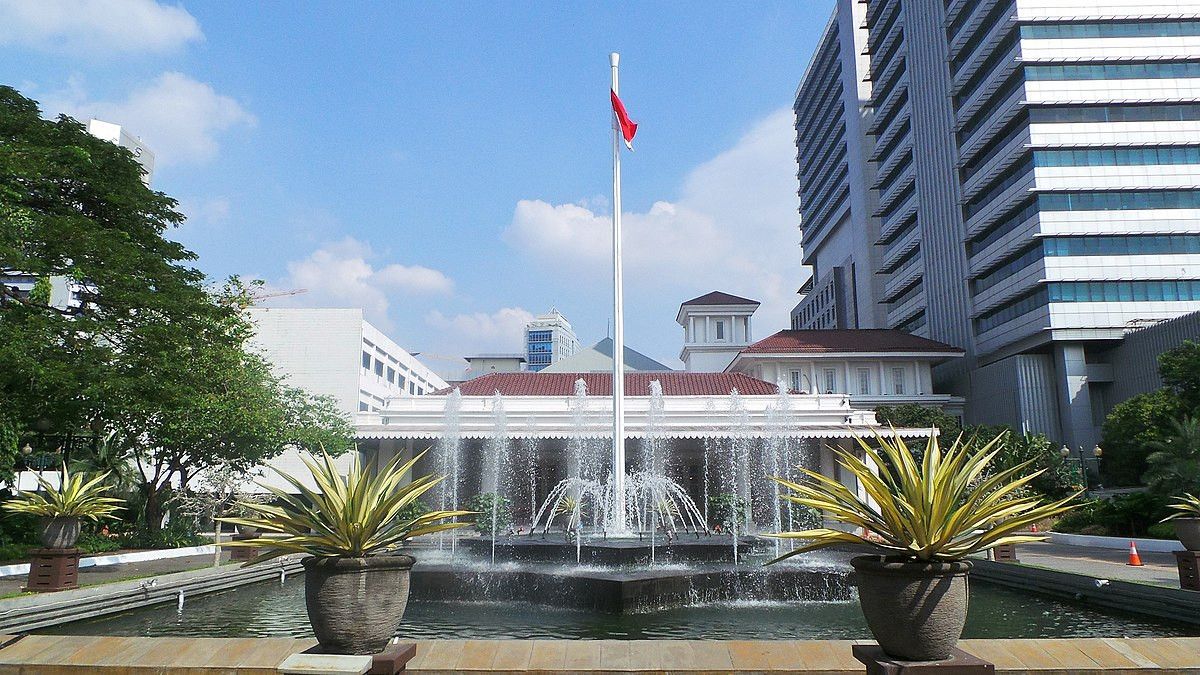


JAKARTA - The DKI Provincial Government and the DKI Jakarta DPRD have agreed on a proposal for General Policy and a Priority Draft and Temporary Budget Ceiling (KUA-PPAS) for the 2026 APBD of IDR 95.35 trillion.
The value of the proposed Jakarta APBD next year was highlighted by Member of Commission A of the DKI Jakarta DPRD, Bambang Kusumanto. Bambang is worried about the potential budget deficit.
"I am quite active in observing the development of our budget in Banggar (budget Agency). I see something that I think is very concerning," said Bambang, Friday, August 22.
Before KUA-PPAS was determined, the 2026 APBD was proposed at IDR 94 trillion. Of this figure, there is already a potential deficit between income and expenditure of IDR 1.8 trillion.
Then, in the ongoing discussion process, the 2026 APBD KUA-PPAS was set at IDR 95.3 trillion. The potential deficit also increased to IDR 2.2 trillion. Bambang revealed that if the deficit occurs, there is a discourse that the DKI Provincial Government will owe it.
"If this is true, this is not right. Why should we raise the budget while increasing the debt," said Bambang.
On that basis, Bambang urged the DKI Provincial Government to re- comb through every budget post that has the potential to contribute to the burden of regional spending too much.
"You have to be observant that the TAPD (Regional Government Budget Team) combs through or shrinks there are still many because it may not be efficient and does not provide great benefits directly to the community," explained the member of the PAN faction.
SEE ALSO:
-
 | TEKNOLOGI
Tanggal Peluncuran Vivo T4 Pro Dikonfirmasi, Simak Spesifikasinya
22 Agustus 2025, 06:05 -
 | LIFESTYLE
Sinopsis Film Materialists: Dakota Johnson Di Antara Pedro Pascal dan Chris Evans
22 Agustus 2025, 05:10
He gave an example, regional spending on agency or institutional grants outside the government. The budget allocation is considered less beneficial directly to the community. The budget efficiency can reduce the burden of spending in 2026.
"The DKI Jakarta Provincial Government can refer to the Presidential Instruction on Expenditure Efficiency in the Implementation of the APBD. Then refer to the central government's instructions. There are 15 items of spending efficiency. For example, infrastructure spending and purchasing equipment and machinery," he added.
The English, Chinese, Japanese, Arabic, and French versions are automatically generated by the AI. So there may still be inaccuracies in translating, please always see Indonesian as our main language. (system supported by DigitalSiber.id)


