



YOGYAKARTA - History is a horizon window for understanding human life and civilization in the past. In historical science, there are various approaches to tracing and understanding the past, one of which is history as an event.
The concept of history as an event sees history as a reality that actually happened in the past, usually in the form of social, political, cultural, or community economic conditions. As a real event, history as an event has a characteristic that distinguishes it from other forms of history.
History as an event is a record of the reality or reality that really happened in the past. These events are part of the collective experience of mankind and have a huge impact on social, political, economic and cultural life.
However, so that an event can be called a historical event, there must be strong and valid evidence. This evidence can be in the form of eyewitnesses, historical documents, archaeological relics, to inscriptions or ancient texts. Without these evidence, an event will only become a myth or a folklore.
History as an event is not the result of imagination or free essays, but must be obtained through scientific research by historians. This process involves primary and secondary source studies, interpretation of data, as well as an in-depth analysis of the social and cultural contexts of that time. Therefore, history as an event can be said to be the most factual and objective form of history.
Reporting from the history book of grade 1 SMA by M. Habib Mustopo, here are three historical characteristics as events.
The first feature of history as an event is unique. This means that historical events only occur once and will never be repeated in the same form. Although there may be other incidents that look similar, there are no two historical events that are completely identical because the context of time, place, actors, and social conditions are different.
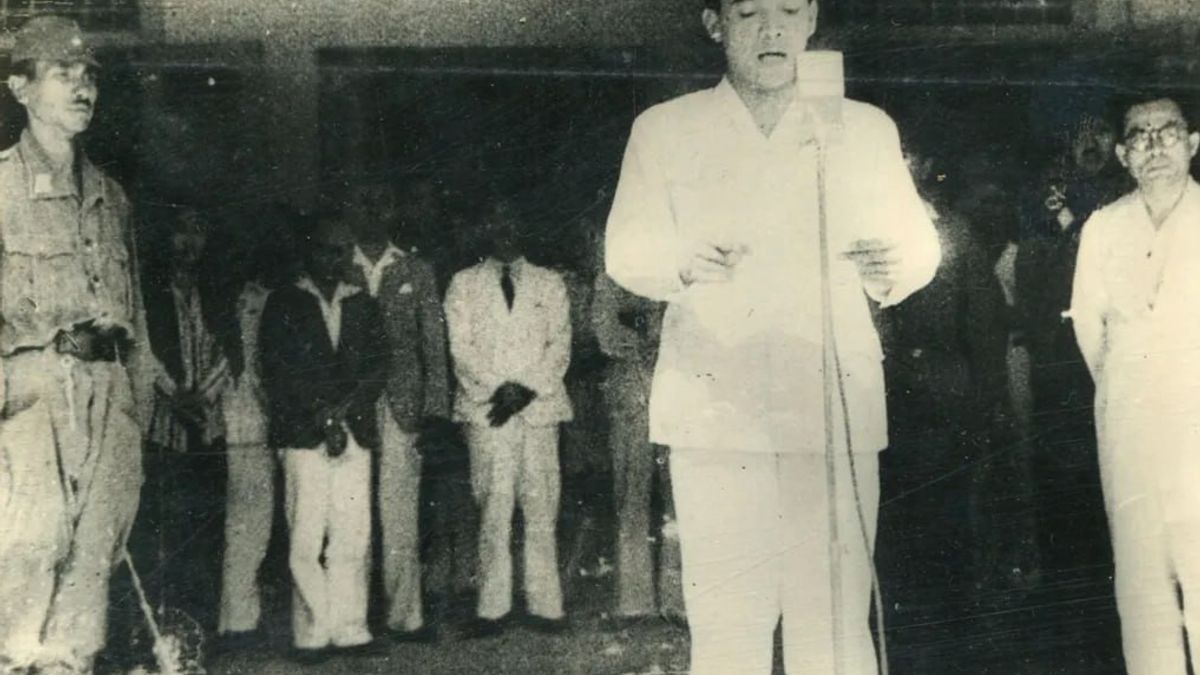
For example, the Proclamation of Indonesian Independence on August 17, 1945 only happened once and there will never be another similar event with the same context.
This uniqueness emphasizes that every event has its own value. Therefore, looking at history as helping us understand how a particular event affects the journey and direction of a society or nation.
History as an event is eternal because events that have occurred cannot change and will always be remembered throughout time. Important events in the past will not just disappear from the collective memory of the community. In fact, these events will continue to be commemorated, studied, and passed down from generation to generation.
The clearest example of this eternal trait is the commemoration of Indonesian Independence Day and Heroes' Day. Even though the incident had passed a long time ago, the values of struggle and the spirit of nationality still lived in the minds of the people.
This situation shows that history as an event is not only part of the past, but also continues to live in the culture and identity of a nation.
The last feature of history as an event is significance. Not all events that have occurred in the past can be called history. Only events that have a major impact on people's lives are categorized as historical events.
SEE ALSO:



The important value of an event can be seen from the political, social, economic, or cultural side, depending on the extent to which these events affect the development of society.
For example, the Youth Pledge in 1928 became a turning point in Indonesia's struggle for independence. This event evoked a sense of unity and nationality that became the foundation of the struggle against colonialism. Because of its great influence on the nation's history, this event is considered very important and worth remembering.
The English, Chinese, Japanese, Arabic, and French versions are automatically generated by the AI. So there may still be inaccuracies in translating, please always see Indonesian as our main language. (system supported by DigitalSiber.id)


