

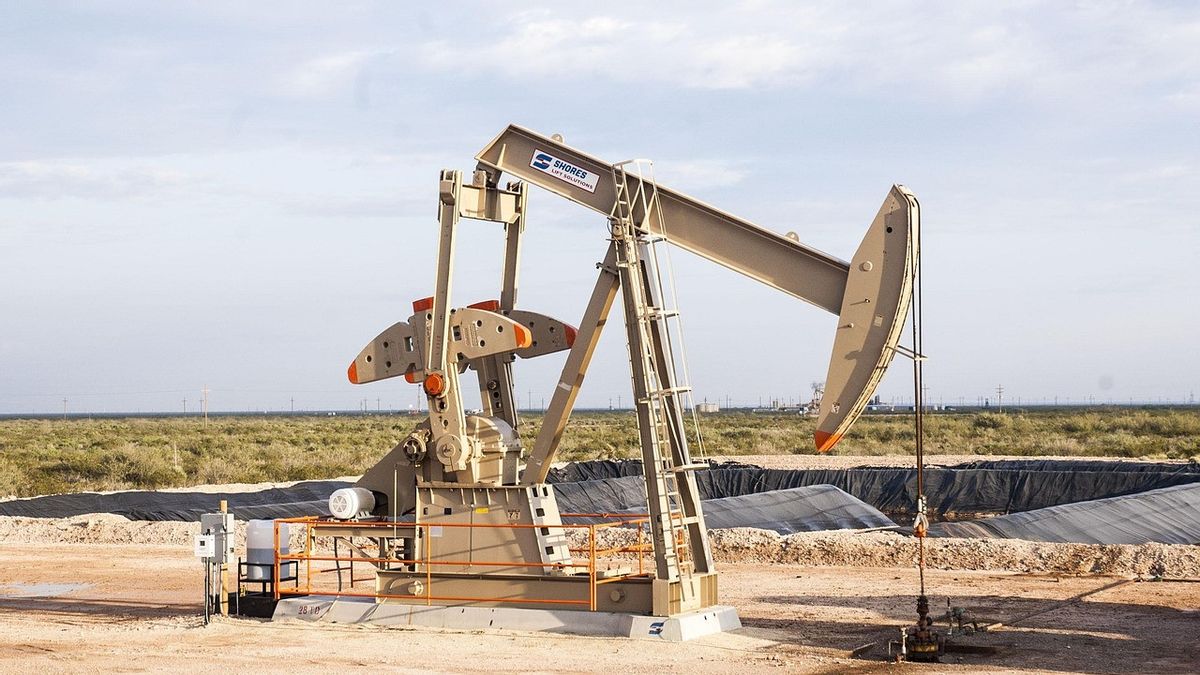


YOGYAKARTA Petroleum is a very important natural resource for human life. Petroleum can be processed into various derivative commodities such as gasoline, LPG, lubricants, avtur, to fuel oil that is beneficial for industrial needs and daily life. So, what is the process of forming petroleum?
Petroleum (also known as fossil fuels) comes from organic material, which is mostly deposited as sediment on the seabed, then decomposed and undergoes a transformation for millions of years. As the process takes a very long time, petroleum is classified into unrenewable natural resources.
Quoted from the Energy Education page, the formation of petroleum takes a very long time, with a process that has started millions of years ago.
About 70 percent of the existing petroleum reserves were formed during the Mesozoikum era (about 252-66 million years ago), 20 percent were formed during the Senozoikum era (about 65 million years ago), and only 10 percent were formed in the Paleozoikum era (541-252 million years ago). This is most likely because the Meszoikum era has a warm tropical climate with abundant amounts of foliance in the ocean.
The process of forming petroleum begins in a warm shallow ocean. In these waters, very small organic material that has died is known as anXics falling to the seabed.
This consists of a small animal called zooplankton and a keci plant called phytoplankton. This material then settles on the seabed and mixes with inorganic material that enters the sea through the river.
This endowment on the seabed within millions of years will turn into petroleum. The energy stored in petroleum originally stems from the sun stored in the form of chemistry in the deadUSH.
For more details, let's look at the stages or processes of oil formation below:
Both phytoplankton and zooplankton and alga and bacteria died, sinking to the ancient seabed. They mix with inorganic materials such as clay carried by the river flow. This mixture forms mud rich in organic materials. The mud can only be formed in a quiet water environment.
This mud should not be exposed to too much oxygen, because organic matter will decay by bacteria and disappear quickly. Therefore, the environment that allows the formation of oil is called an anoxic environment (oxygen minimize).
Before the organic material decomposes, it will be buried by additional sediments and experience lithification (twisting into sediment rocks), forming organic shale.
Hoarding of materials on the seabed helps create an anosic environment because there is no direct contact with the atmosphere.
If this organic sheet is buried at a depth of between 2 and 4 kilometers, its temperature increases due to pressure from within the earth. These temperatures and pressures turn organic matter into waxy material called kerogen. This clove containing kerogen is known as oil shale or oil sheet.
If the kerogen temperature is between 90$C to 160$C, it will turn into petroleum and natural gas. If the temperature exceeds that limit, only natural gas or graphite is formed. This temperature range is known as an oil window.
Oil has a mass of a lighter type than water, so when it comes out of the rock source, it moves up through rock pores, replacing water. Rocks that store large amounts of oil are called reservoir rocks.
In order for oil to remain in the reservoir, there must be a layer of rock that is thick and does not penetrate (impermeabel) on it as a cover. If this layer exists, then oil, gas, and water will be trapped below and can be taken through drilling.
SEE ALSO:
-
 | TEKNOLOGI
Tim Cook Hadiri Jamuan Kenegaraan Inggris Bersama Presiden Trump
19 September 2025, 06:05 -
 | LIFESTYLE
Mengapa Masyarakat Jahiliyah Tidak Mempercayai Adanya Hari Kiamat? Ini Sebab-sebabnya
19 September 2025, 04:25

Geological changes in the earth's crust then pushed the layers closer to the surface, making them more accessible for petroleum exploration and production.
That's information about the process of forming oil. Hopefully the review above can add insight to readers. To get other selected news updates, keep reading VOI.ID.
The English, Chinese, Japanese, Arabic, and French versions are automatically generated by the AI. So there may still be inaccuracies in translating, please always see Indonesian as our main language. (system supported by DigitalSiber.id)
Most Popular Tags
#Prabowo Subianto #donald trump #Febrie Adriansyah #8791 #giias 2026Popular


