


JAKARTA - The Meteorology, Climatology and Geophysics Agency (BMKG) said that the Australian Monsoon which was active in the period June to September was the main trigger for the dry season in the southern region of Indonesia's equator, accompanied by dry weather, colder night temperatures, and strong winds and heavy rains.
"In the period 2'5 July 2025, people also need to be aware of the potential for heavy rain in a number of areas," said BMKG Director of Public Meteorology Andri Ramadhani as reported by ANTARA, Wednesday, July 2.
Australian monsoons are seasonal winds coming from the Australian Continent to the north passing through Indonesia. This wind is dry and cold enough because it comes from Australia which is in winter.
Based on BMKG analysis, the main impact of Australian Monsoon was felt in the southern region of Indonesia such as Java, Bali, and Nusa Tenggara. The weather became drier and the rain fell more rarely, so that the region entered the dry season.
"In addition, the air temperature from night to early morning can feel colder than usual," said Andri.
The Australian Monsun wind also caused the wind to blow stronger, especially in the southern coastal area of Indonesia.
SEE ALSO:

However, the BMKG predicts that in the next July 2 5 period there will be the potential for heavy rain in some areas, especially West Java, East Java, Bali, South Sulawesi, and South Papua.
This heavy rain potential was observed from the prediction of the long-wave radiation anomaly or the Longwave Radiation (OLR) which showed negative values, signaling the sky was more covered with clouds, he said.
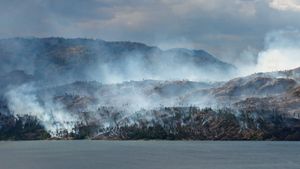
BMKG reminded that prolonged dry weather conditions due to Australian Monsoons can still trigger drought risks that have an impact on the availability of water and the agricultural sector, as well as increase the risk of forest and land fires in a number of vulnerable areas.
In addition, strong east wind can cause higher sea waves in the waters south of Java to Nusa Tenggara, which shipping and fishermen need to watch out for.
"Although this phenomenon is natural every year, people still need to be wise in using water, monitor official BMKG information, and be aware of the potential for extreme weather," said Andri.
The English, Chinese, Japanese, Arabic, and French versions are automatically generated by the AI. So there may still be inaccuracies in translating, please always see Indonesian as our main language. (system supported by DigitalSiber.id)


