

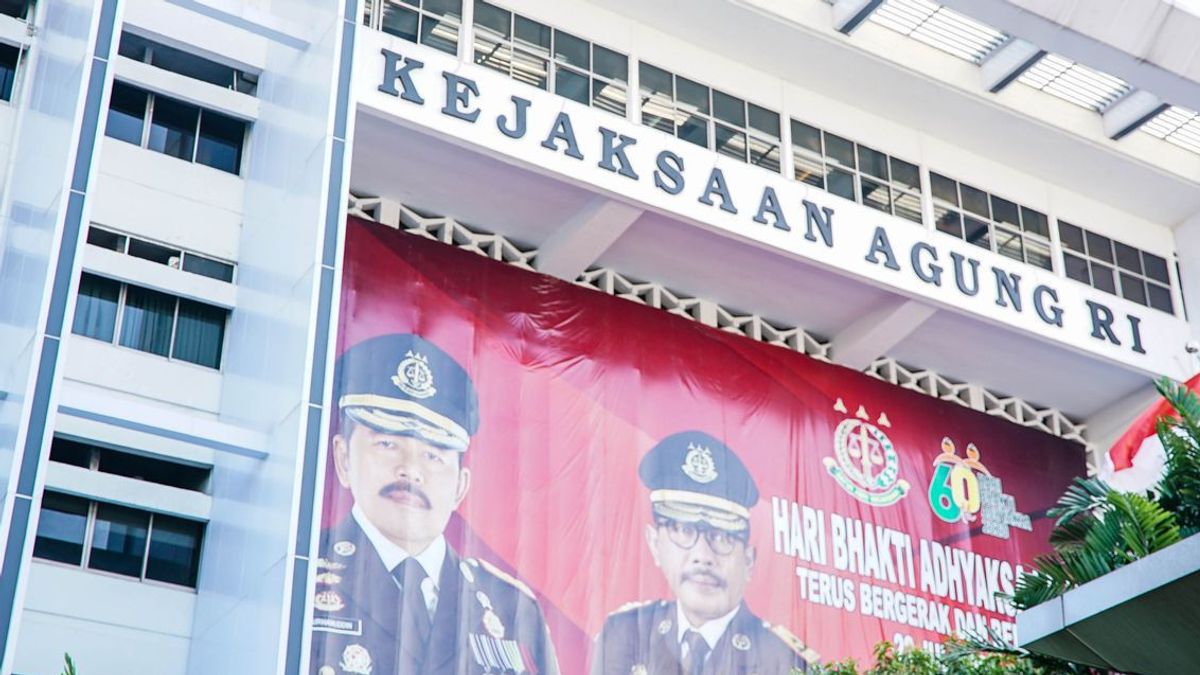


JAKARTA - Member of Commission III of the House of Representatives, Sarifuddin Sudding, responded to the Attorney General's move to establish a memorandum of understanding (MoU) with four telecommunication operators to support the law enforcement process, including the matter of wiretapping.
Sudding warned law enforcement efforts not to violate public privacy.
Sudding assessed that this MoU is a strategic and relevant step, especially in tracking fugitives, collecting digital evidence, and accessing supporting data in legal proceedings.
However, he stressed, the use of technology, especially wiretapping and access to personal information, must remain within the constitutional corridor and respect for citizens' human rights.
"In a democratic state of law, the principle of check and balance is a foundation that should not be ignored, especially when the state is given the authority to access the private sphere of citizens. Law enforcement efforts should not violate public privacy," said Sarifuddin Sudding, Thursday, June 26.
"Law enforcement must not necessarily carry out wiretapping without clear legal objectives, and of course it must meet existing criteria and mechanisms," he continued.
Sudding emphasized that a memorandum of understanding that includes installing wiretapping devices and providing telecommunications information recordings must be closely monitored. So that according to him, wiretapping does not cause violations of privacy, abuse of authority, or excessive surveillance.
"We recognize the urgency of law enforcement, particularly in major cases and tracking the People's Wanted List (DPO), which does require a high-tech approach," said Sudding.
"It should be emphasized that wiretapping and access to personal communication information have high sensitivity which is strictly regulated in the law," he continued.
Sudding also explained that wiretapping and access to personal communication information are sensitive actions that have been strictly regulated in the ITE Law and the Telecommunications Law. Both laws require a clear and measurable legal process.
Therefore, Commission III of the DPR reminded that cooperation like this must remain based on a transparent regulatory framework and supervision.
"Contamination and access to personal communication are very sensitive actions, so they must be carried out in accordance with applicable legal provisions," concluded Sudding.
SEE ALSO:
-
 | BERITA
Presiden Iran Serukan Timur Tengah Bebas Senjata Nuklir, Israel Harus Ikut
26 Juni 2025, 10:42 -
 | BERITA
Puluhan Pemukim Israel Serang Kota di Tepi Barat, 3 Warga Palestina Tewas
26 Juni 2025, 10:03


The AGO signed a memorandum of agreement with four telecommunication operators related to law enforcement support. The cooperation was carried out with four cellular operators, namely PT Telekomunikasi Indonesia Tbk, PT Telekomunikasi Selular, PT Indosat Tbk, and PT Xlsmart Telecom Sejahtera Tbk.
The AGO said this collaboration focused on exchanging and utilizing data or information in the context of law enforcement, including installing and operating information wiretapping devices and providing telecommunications information recordings.
This collaboration with telecommunications operators is said to be in line with Law No.11/2021 concerning amendments to Law Number 16 of 2004 concerning the Prosecutor's Office.
The English, Chinese, Japanese, Arabic, and French versions are automatically generated by the AI. So there may still be inaccuracies in translating, please always see Indonesian as our main language. (system supported by DigitalSiber.id)


