

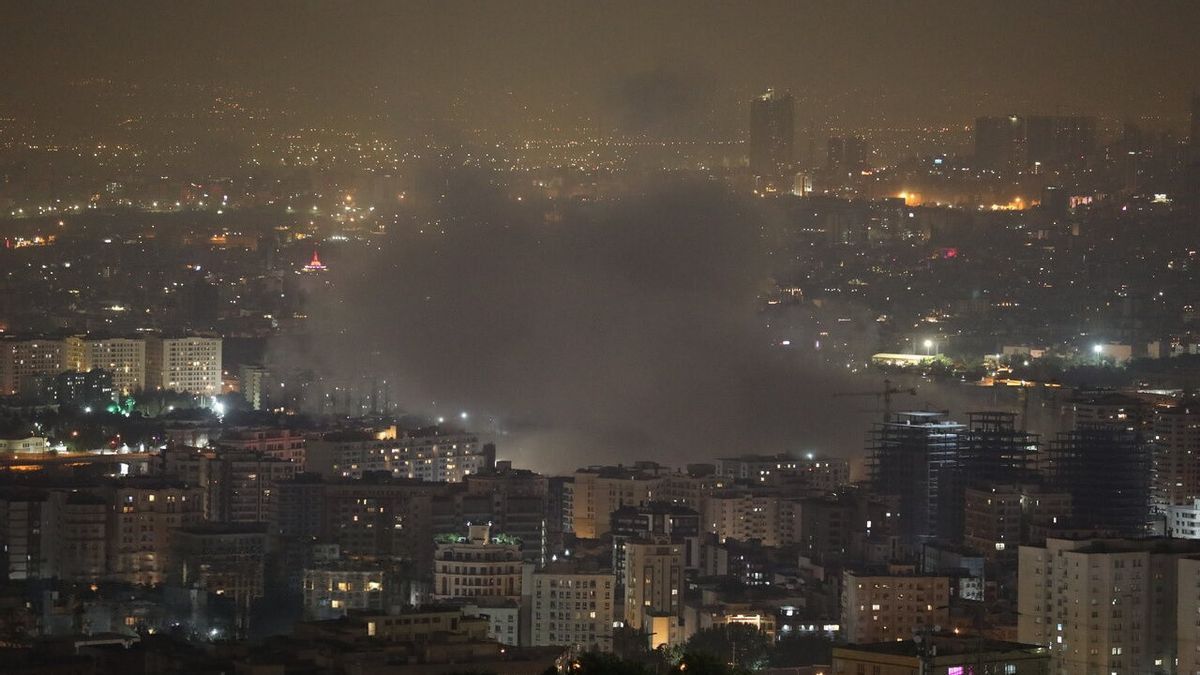


JAKARTA - The Indonesian Ministry of Foreign Affairs (Kemlu) stated that nuclear installations in Iran cannot be attacked under any circumstances because they can endanger human safety and also damage the environment.
a spokesman for the Indonesian Ministry of Foreign Affairs, Rolliansyah Soemirat, said this was in accordance with the rules issued by the International Atomic Energy Agency (IAEA) and was mutually agreed upon by all United Nations member countries (UN).
"The threat of an attack on nuclear installations in Iran also certainly threatens the safety of civilians including Indonesian citizens and has the potential to become a humanitarian disaster," Rolliansyah said in an online press briefing in Jakarta, Wednesday, June 18, which was confiscated by Antara.
"For this reason, the Indonesian Ministry of Foreign Affairs continues to actively convey Indonesia's position in various meetings in the IAEA which continue to take place related to this problem," said the man who is usually called Roy.
"What's worse is that attacks or threats of attacks on nuclear installations will jeopardize the regime of non-proliferational regulation of nuclear weapons as currently upholding together by all parties at non-proliferation nuclear weapons contracts," Roy said.
SEE ALSO:

Earlier, Israel attacked Iran in the early hours of Friday, June 13, aiming to eradicate the country's nuclear program by targeting three major Iranian nuclear facilities, namely Natanz, Isfahan and Fordow, as well as a number of leading scientists involved in nuclear research and development.
IAEA Director-General Rafael Mariano Grossi said that radiation levels appear normal outside the Natanz nuclear installation and other facilities in Isfahan.
However, the IAEA Director-General warned that the military escalation "enhanced the possibility of releasing radiology."
Gross stressed that it is very important for the IAEA to receive timely and regular technical information about their respective facilities and locations.
He also emphasized that without this information, the IAEA could not accurately assess its radiological conditions and potential impact on the population and environment and could not provide the necessary assistance."
The English, Chinese, Japanese, Arabic, and French versions are automatically generated by the AI. So there may still be inaccuracies in translating, please always see Indonesian as our main language. (system supported by DigitalSiber.id)


