
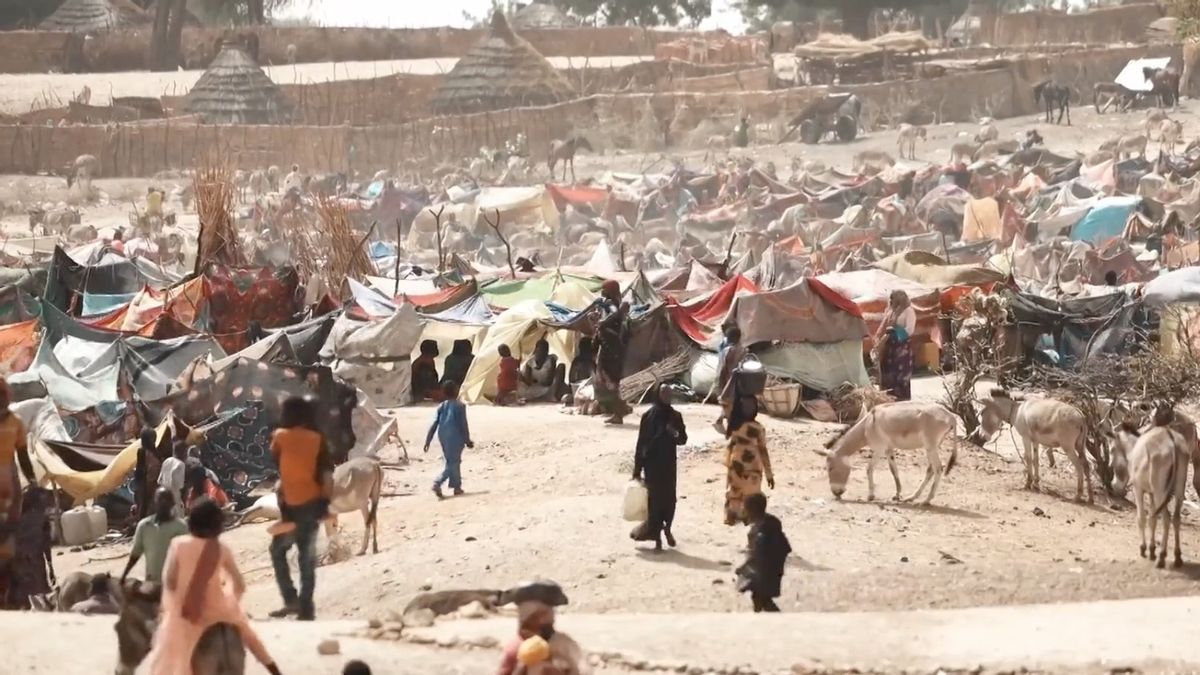


JAKARTA - At least 172 people died in the vaccine outbreak that hit Sudan, with most of the new cases in the wider capital area.
The war-torn state health ministry said status cases had risen to 2,729 in seven days and affected people in six of Sudan's 18 states.
Nine percent of new cases ofrices have been reported in the capital area wider than the three banks of the Nile: Khartoum, Omdurman, and Bahri.
Cholera, an acute diarrhea disease caused by consumption of contaminated water or food, can kill within hours if not treated. This disease is easily prevented and treated if clean water, sanitation, and proper medical care are available.
Last Tuesday, the ministry said 51 people had died fromterisk from more than 2,300 cases reported during the previous three weeks, 90 percent of which were in Khartoum state, reported The National May 28.
The epidemic hit Sudan at a time when the country of 50 million people was in the grip of a devastating two-year civil war between armed forces and paramilitary Rapid Support Forces (RSF).
Sudan's health sector was hit hard by war in three cities in the capital, which is controlled by the RSF until March when soldiers took it back after several months of fierce fighting.
In addition to crippling Sudan's infrastructure, including health facilities, the war has killed tens of thousands of people, displaced about 13 million people, and left about 26 million people facing acute hunger, with bags of hunger emerging in most of the vast and poor countries.
The latest death toll fromrices also coincided with reports that the RSF drone had hit a fuel depot in Kosti's southern city of White Nile State.
Tuesday's attack was the latest in a series of devastating attacks by RSF drones against strategic facilities in Port Sudan, the capital of the army during the war in the Red Sea.
The attacks included major fuel depots, international airports, military bases, and electric transformers. Witnesses in Kosti reported hearing explosions and seeing thick smoke billowing over the city as soon as the drone hit.
Earlier this month, RSF launched a drone strike in Khartoum, including three power plants, prompting massive power outages disrupting electricity and water services and arguably contributing to the vaccine outbreak.
Cholera is an endemic disease in Sudan, but outbreaks have become worse and have been more frequent since the war broke out in April 2023, when tensions and political clashes over the months between the army and RSF turned violent.
With the electricity supply and then the local water grid not functioning, residents are forced to switch to unsafe water sources, according to Doctors Without Borders (MSF).
SEE ALSO:



"The water treatment station no longer has electricity and cannot provide clean water from the Nile," said Slaymen Ammar, MSF's medical coordinator in Khartoum, in a statement.
In Omdurman, residents said they had no electricity for nearly two weeks.
"Kami sekarang mengambil air langsung dari Sungai Nil, membelinya dari gbak yang membawanya dalam gelang," kata warga Bashir Mohammed.
According to a doctor at Al Nao Omdurman Hospital, the main health facility functioning in the capital city, residents were forced to "drink unprocessed Nile water, after the water pump station was closed."
Up to 90 percent of hospitals in Sudan at some point were forced to close due to fighting, according to a union of doctors, with health facilities regularly invaded, bombed and looted.
The English, Chinese, Japanese, Arabic, and French versions are automatically generated by the AI. So there may still be inaccuracies in translating, please always see Indonesian as our main language. (system supported by DigitalSiber.id)
Most Popular Tags
#Prabowo Subianto #donald trump #2026 World Cup #Febrie Adriansyah #8791Popular


