


JAKARTA - Roman Catholic cardinals will start their duty on Wednesday to elect a new whale, isolate themselves from the world until they choose people they hope to unite churches globally that are diverse but divided.
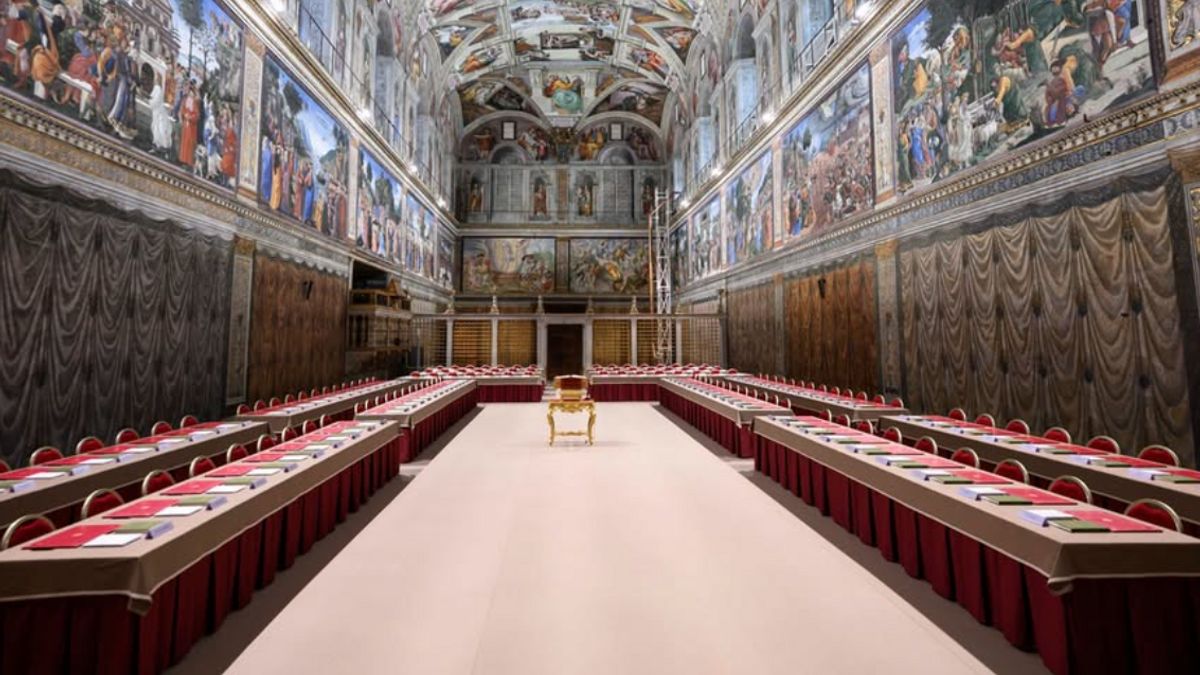
In an already existing process since the Middle Ages, cardinals will enter the Sistina Chapel decorated with fresco paintings at the Vatican after a public Mass in St. Peter's Basilica and begin their secret conclave to seek a replacement for Pope Francis, who died last month.
No whales were selected on the first day conclave for centuries, so voting could last for days before one of the Church's red hat figures received the majority of the two-thirds required to become the 267th whale.
Chip installation for the selection of new whales in Sistina Chapel/PHOTO via Instagram @vaticannews
There will only be one vote on Wednesday, May 7. After that, cardinals can vote four times a day.
Reported by Reuters, black smoke from themascor on the roof of the chapel will mark inconclusive voting.
Meanwhile, white smoke and the sound of the bell will signal that the 1.4 billion-member church has a new leader.
The influence of whales reaching far beyond the Catholic Church, giving moral voices and calls for conscience that other global leaders cannot match.
The cardinals in recent days have given different assessments of what they seek on the next whale.
While some have called for a continuation of Francis' vision of greater openness and reforms, others say they want to turn back time and embrace the old tradition. Many indicate that they want more predictable and measurable papalities.
The 133 cardinals of 70 countries will enter the Sistina Chapel, up from 115 out of 48 countries in the last conclave of 2013 -- growth that reflects Fransiskus' efforts to expand the reach of the Church to remote areas with few Catholics.
No favorite sosooks have clearly emerged, although Cardinal Pietro Parolin of Italy and Cardinal Luis Antonio Tagle of the Philippines are considered at the forefront.
But if it becomes clear the two of them can't win quickly, the votes are likely to turn to other competitors, with the electoralists possibly united around geography, the doctrineal closeness, or the same language.
Among their considerations is whether they should look for a Pope from the southern hemisphere where his congregation is growing, as they did in 2013 with Pope Francis from Argentina, returning control to Europe or even selecting the first Pope from the US.
The English, Chinese, Japanese, Arabic, and French versions are automatically generated by the AI. So there may still be inaccuracies in translating, please always see Indonesian as our main language. (system supported by DigitalSiber.id)
Most Popular Tags
#Prabowo Subianto #donald trump #Febrie Adriansyah #8791 #giias 2026Popular


