

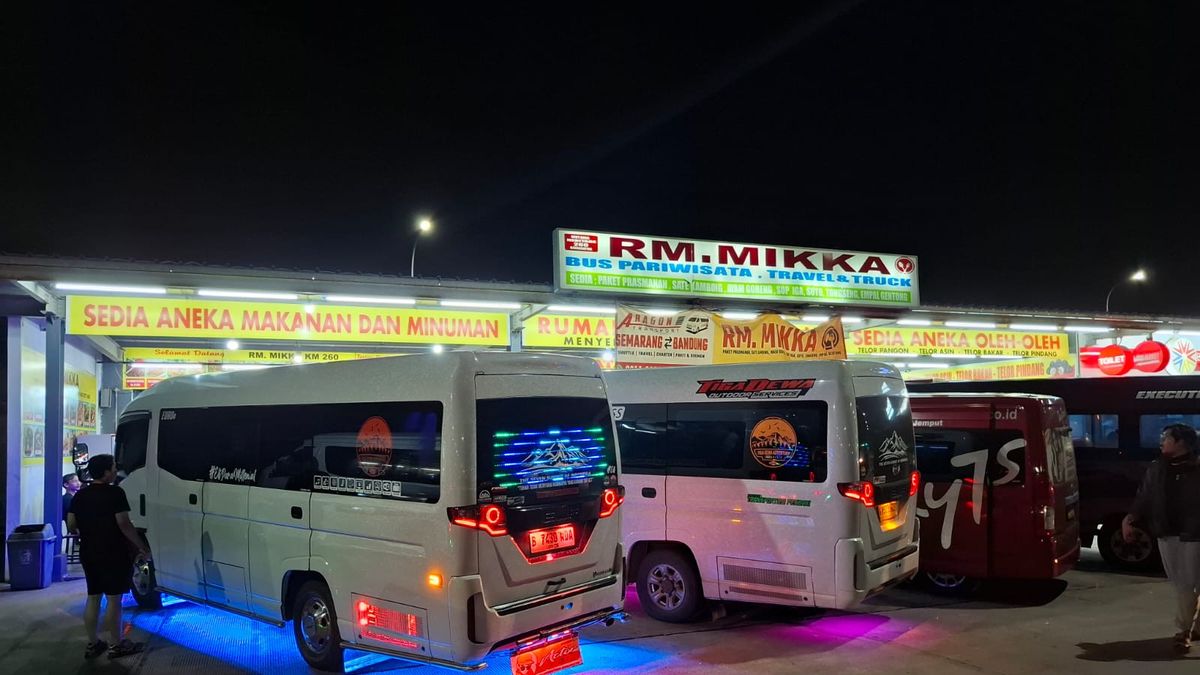


The rise of illegal travel is a need for travel that cannot be accommodated by official or legal public transportation services belonging to the government.
Some people who are active in the Jabodetabek area who come from rural areas take advantage of illegal travel. The reason is, rural transportation has disappeared, while the mobility needs of residents in rural areas are increasing.
Transportation Observer Djoko Setijowarno said the existence of illegal travel operating in the Jabodetabek area was easily recognized by a sticker attached.
Vehicles have stickers as markers of illegal travel to avoid raids. The owner of the sticker is a law enforcement officer by buying.
SEE ALSO:
-
 | EKONOMI
Kepala Badan Gizi Sebut Timnas Indonesia Sulit Menang karena Gizi Tidak Bagus
22 Maret 2025, 16:24


"This person guarantees that if the vehicle is ticketed, it will be helped to finish immediately. However, now some are not Sticky, but easily recognized from the type of vehicle it uses is Elf or Grandmax," said Djoko when confirmed by VOI, Sunday, March 23.
The rise of illegal travel, continued Djoko, indicates the government's failure to provide public transportation to remote areas of the country.
"So it's not innovation, but the community's need for travel to make a living that is not fulfilled by the government. Even though the government is obliged to provide public transportation," he said.
Djoko said that the obligation to provide public transportation is in Article 138 of Law Number 22 of 2009 concerning Road Traffic and Transportation.
Public transportation is carried out in an effort to meet the needs of transportation that is safe, comfortable, and affordable. The government is responsible for the implementation of public transportation. Public transportation of people and/or goods is only carried out using General Motorized Vehicles.
Article 139 (1) The government is obliged to ensure the availability of public transportation for transportation services for people and / or intercity goods between provinces and across borders; (2) Provincial Governments are required to ensure the availability of public transportation for people's transportation services and / or intercity goods in the province; (3)
The district/city regional government is obliged to ensure the availability of public transportation for transportation services for people and/or goods within district/city areas; and (4) the provision of public transportation services is carried out by state-owned enterprises, regional-owned enterprises, and/or other legal entities in accordance with the provisions of the legislation.
According to Djoko, the rise of this illegal travel business has made it uneasy among official public transport entrepreneurs. The reason is, official public transportation is asked to obey regulations, while on the other hand there are public transportation that do not comply with regulations. Even these illegal travel are increasingly operating without any firm action from the government to eradicate it.
"The dark travel business has been operating for a long time and the number has hundreds of fleets every day entering the Jabodetabek area," he said.
Djoko further said that the existence of this illegal travel has disrupted and harmed official public transportation operations, such as AKAP Bus, AKDP Bus and AJAP.
"The Ministry of Transportation in collaboration with the Ministry of Home Affairs must massively fix public transportation in the regions," he said.
The English, Chinese, Japanese, Arabic, and French versions are automatically generated by the AI. So there may still be inaccuracies in translating, please always see Indonesian as our main language. (system supported by DigitalSiber.id)

