
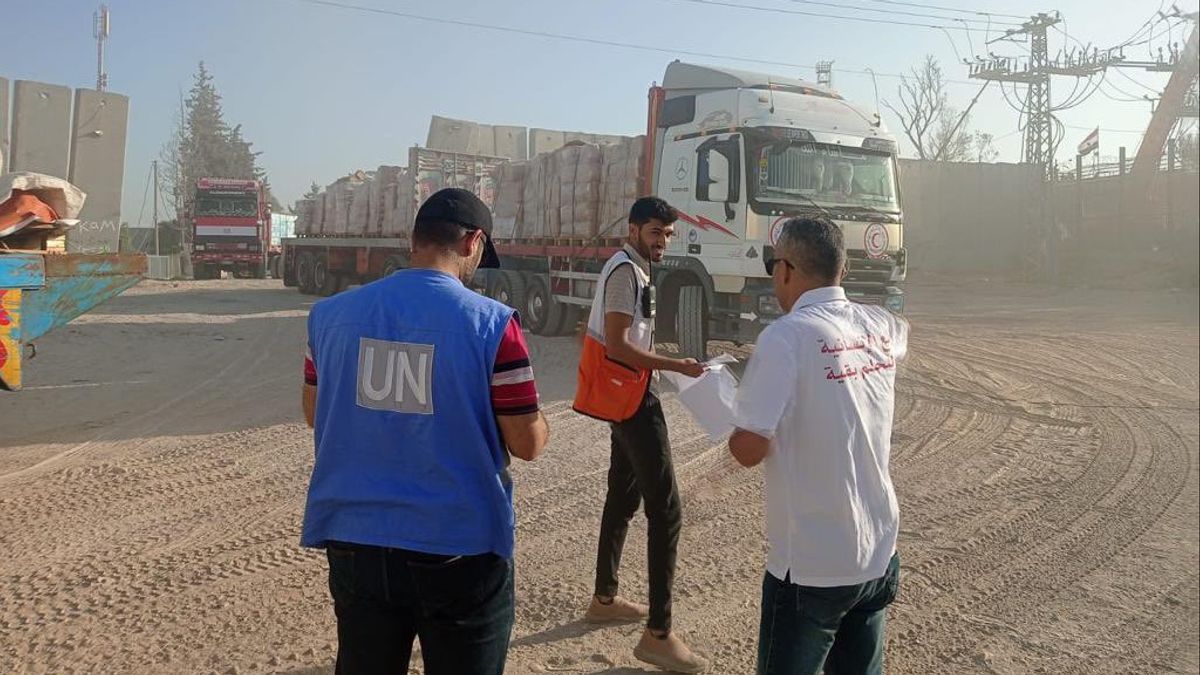


JAKARTA - The World Health Organization (WHO) calls on the international community to step up and fund the enhanced relief response in the Gaza Strip after Israel and Hamas reached a ceasefire agreement.
The UN health agency said its member countries, donors and the global community, including the private sector, must support urgent health needs and rebuild Gaza's health care system in the long term.
"The PBB cannot provide a response alone," said Rik Peeperkorn, WHO's representative for the occupied Palestinian Territories.
Negotiators reached a gradual agreement on Wednesday to end the war in Gaza between Israel and Hamas after 15 months of conflict since October 7, 2023, fueling tensions in the Middle East. This will take effect on Sunday.
The deal includes the gradual release of hostages arrested by Hamas-led militants, in exchange for Palestinians detained in Israeli prisons.
The deal is also expected to ease tensions in the Middle East sparked by the conflict in Gaza, then ignite the occupied West Bank of Israel, Lebanon, Syria, Yemen, and Iran, raising fears of Israel's war with Iran.
Qatari Prime Minister Sheikh Mohammed bin Abdulrahman bin Jassim Al Thani said there would be a "follow-up mechanism" consisting of representatives from the United States, Qatar and Egypt who will headquarter in Cairo, responsible for monitoring the implementation of the hostage release agreement and the ceasefire.
Part of the ceasefire deal requires 600 humanitarian aid trucks to be allowed into Gaza daily since the start of the deal on Sunday.
Peeperkorn said the WHO was ready to provide assistance despite "significant security and political constraints to deliver aid throughout Gaza" need to be removed. He urged all parties to enforce a ceasefire agreement.
SEE ALSO:
-
 | BERITA
Pemerintah Tanzania Sebut Tidak Ada Tanda-tanda Wabah Marburg di Negara Tersebut
17 Januari 2025, 11:00 -
 | BERITA
Ayatollah Khamenei: Kesabaran dan Ketangguhan Perlawanan Palestina Memaksa Zionis Mundur
17 Januari 2025, 10:00 -
 | BERITA
Kepala Human Rights Watch Nilai Kembalinya Trump ke Gedung Putih Mengancam Kebebasan
17 Januari 2025, 09:30

"Now is the time for member countries, donors and the global community to advance and provide flexible funding to enable this fast and effective response to urgent and long-term needs," he explained.
He explained that the cost of rebuilding the health system in Gaza is huge, estimated at around $3 billion for next year and USD 10 billion in the next six or seven years, although this is just an initial estimate.
"WHO remains committed to dealing with the acute health needs of the people in Gaza now and after the agreement is in effect and to support the rebuilding of the Gaza health system. This will be a very large effort. Less than half of the hospitals in Gaza are functioning," said WHO Director-General Tedros Adhanom Ghebreyesus.
The English, Chinese, Japanese, Arabic, and French versions are automatically generated by the AI. So there may still be inaccuracies in translating, please always see Indonesian as our main language. (system supported by DigitalSiber.id)


